SkoolOfCode
An online coding school platform built during COVID — live class scheduling, Zoom integration, subscription payments, and a structured teacher QA system — for a founding team that was uncompromising about the quality of every session.
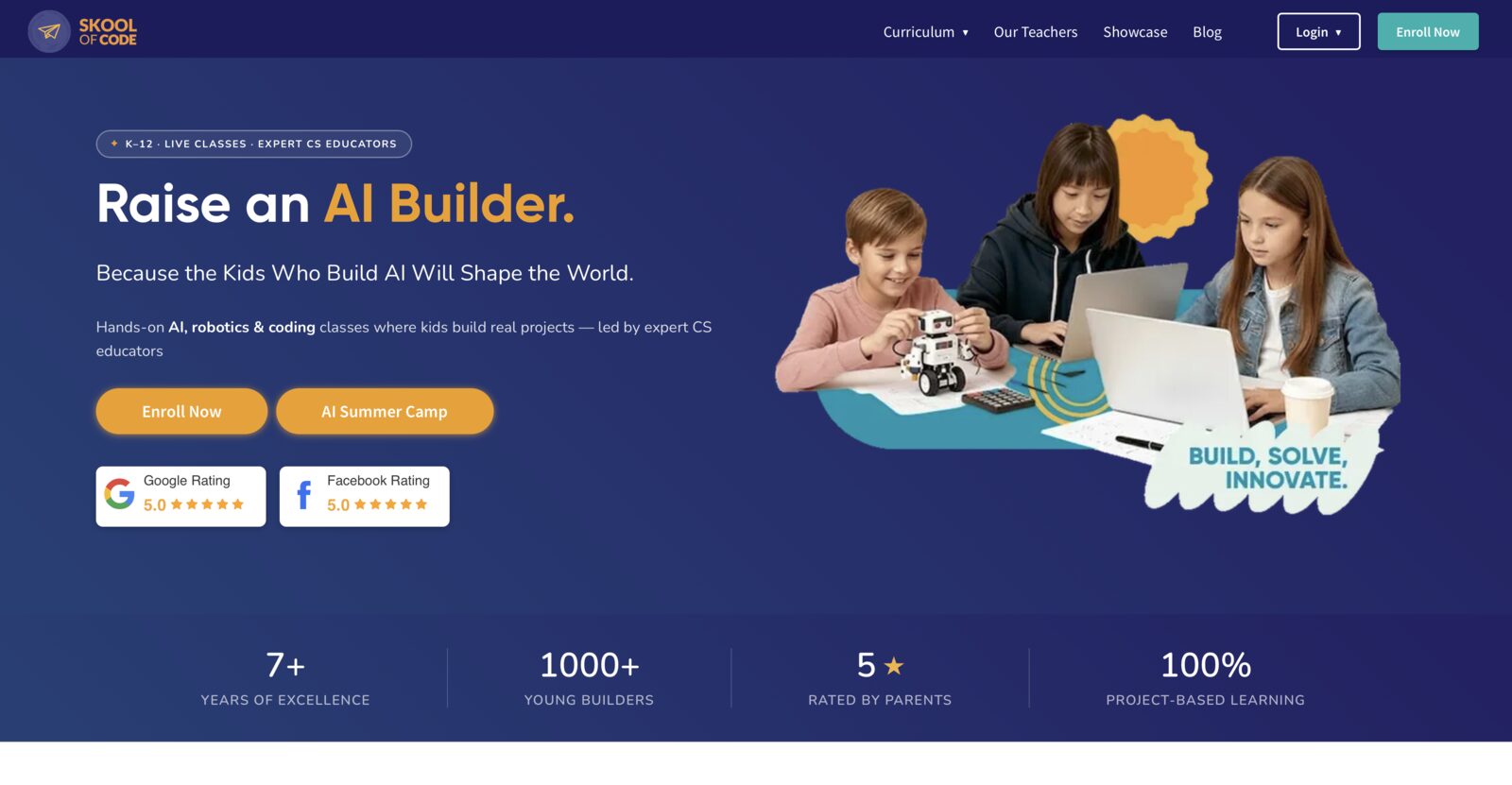
SkoolOfCode delivers live online coding, AI, and robotics education for K–12 students — with credentialed computer science educators, a project-based curriculum, and a selection process that admits only the top 1% of applicants as teachers. The platform was built during the COVID era, when demand for quality online learning had surged but the tooling to run a structured, quality-controlled online school was far from obvious. Today, with 1,000+ students and seven years of operation behind it, SkoolOfCode runs the platform with minimal involvement from us — a reflection of how it was built.
A learning platform built around quality at every step — from enrolment to session review
-
Course Platform & Class Scheduling
We built the core learning platform — course listings, enrolment flows, and a scheduling system that connected students to upcoming classes across one-on-one and small group formats. Each course was tied to a live calendar, giving students and teachers a clear view of upcoming sessions. The platform was designed to support a curated set of teachers operating across multiple courses simultaneously, with each student’s subscription determining which sessions they could access.
-
Zoom Integration — Live Classes & Recordings
Rather than asking students and teachers to manage Zoom separately, we integrated the Zoom API directly into the platform. Enrolled students and their assigned teachers could join a class through the platform itself, with Zoom handling the video layer. Session recordings were automatically captured and stored — accessible to students for review after the class, and to the SkoolOfCode team for quality assessment. This integration made the class experience cohesive and ensured recordings were available for the QA process without any manual steps.
-
Stripe Subscription Payments
Course access was managed through a subscription model, with payments handled via Stripe. We built the subscription and billing flow into the platform — covering enrolment, recurring billing, and the access controls that tied a student’s subscription to the specific courses they had paid for. The payment integration needed to be reliable enough for recurring family payments and simple enough that the SkoolOfCode team could manage it without ongoing technical involvement.
-
Teacher QA & Feedback System
SkoolOfCode’s founders were uncompromising about the quality of every session. To support this, we built a structured QA system that went well beyond collecting ratings. Session recordings were peer-reviewed by other teachers, and the platform tracked feedback across a defined set of criteria — how the session was conducted, how the teacher performed, and how students responded. This feedback was aggregated and surfaced to the founders in a form they could act on, giving them the visibility to maintain standards across a growing team of educators without reviewing every recording personally.
-
A Platform That Runs Itself
After supporting the launch and running the platform alongside the SkoolOfCode team for two years, we handed it over — and it has been operating with minimal maintenance ever since. For an education business that runs on the quality of its human interactions, not its technology, this is exactly the right outcome. The platform does its job reliably in the background while the team focuses on teaching. We built it that way deliberately, and we are pleased that it has held up across seven years of operation.
Building a learning platform or LMS?
Whether you’re building from scratch or extending an existing LMS — live sessions, course management, QA workflows, or payment integration — we have built the full stack and know where the complexity hides.
Start a conversation